Tuesday, September 3, 2013

Changes of State: Nature and the Limits of the City in Early Modern Natural Law

Annabel S. Brett (University of Cambridge). Changes of State: Nature and the Limits of the City in Early Modern Natural Law (Princeton University Press, 2011).

"With authority and grace, Annabel Brett reconstructs a richly challenging tradition of early modern reflection on human agency and political community. Her unfailingly acute and original analyses of the arguments of, among others, Vitoria, Soto, Suárez, Grotius, and Hobbes will be a revelation to political theorists, philosophers, and historians alike, and will decisively inform contemporary discussions of liberty, rights, and the fate of the state."
—David Armitage, Harvard University

Eco-Republic: What the Ancients can Teach Us about Ethics, Virtue, and Sustainable Living


Melissa Lane (Princeton University). Eco-Republic: What the Ancients can Teach Us about Ethics, Virtue, and Sustainable Living (Princeton University Press, 2012).

“This is a provocative and powerful book. Lane recommends the ethical vision of Greek antiquity rather than a society of individuals following legal rules. Such a vision is, Lane argues, a sustainable one—bringing ethics, ecology, and politics together.”
—Justin Champion, University of London


Governing America: The Revival of Political History


Julian E. Zelizer (Princeton University). Governing America: The Revival of Political History (Princeton University Press, 2012).

“In recent years, the study of American political history has experienced a remarkable renaissance ….Governing America addresses issues of wide interest, including the rise of the welfare state, the development of modern conservatism, the history of Congress, the struggle over campaign finance, changing views about presidential power, and national security.”
—Governing America Book Jacket

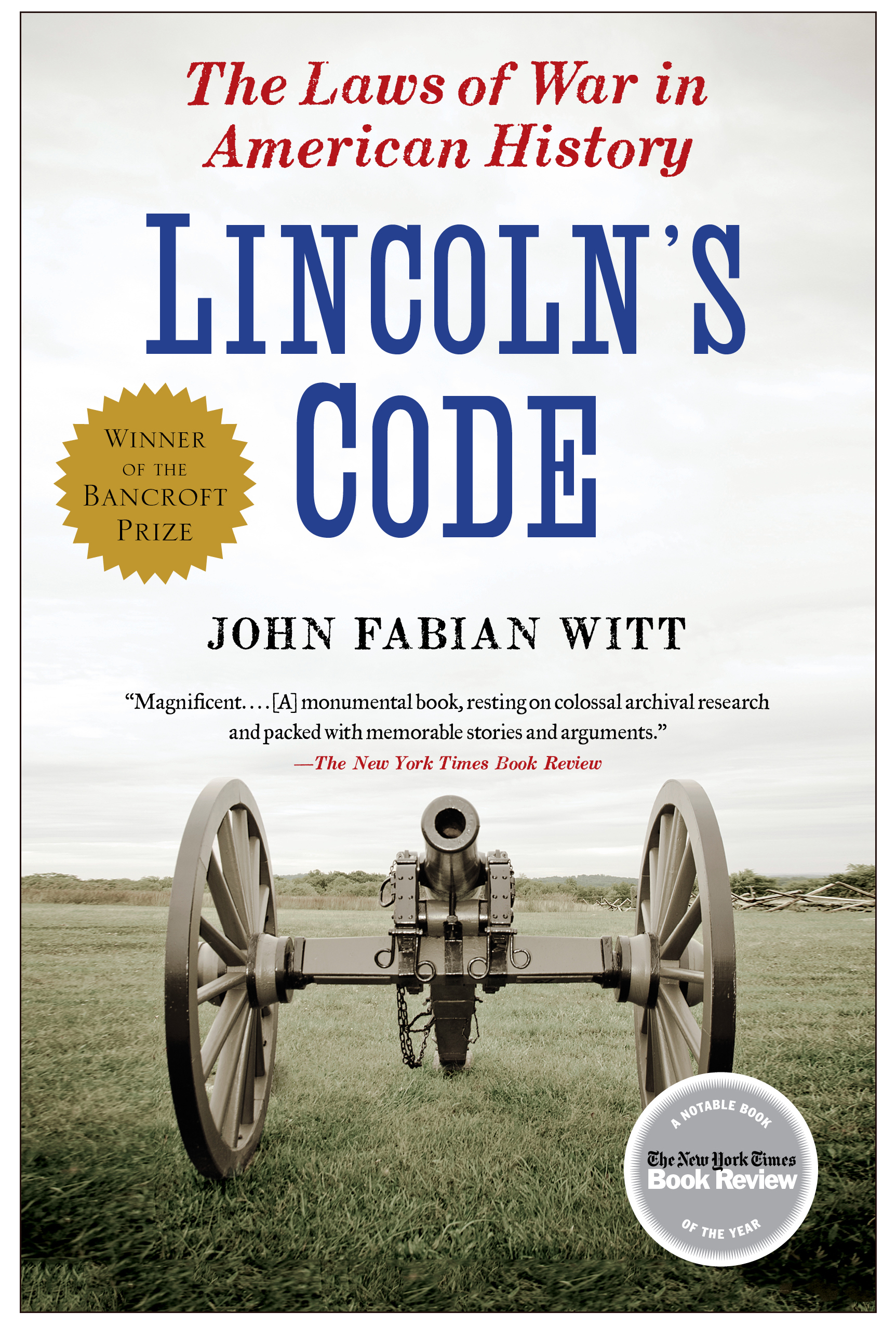
Lincoln’s Code: The Laws of War in American History


John Fabian Witt (Yale Law School). Lincoln’s Code: The Laws of War in American History (Free Press, 2012).

“In this pathbreaking and deeply original book, John Fabian Witt tells the hidden story of the laws of war in the first century in the United States –and of the extraordinary code that emerged from it to change the course of world history. Lincoln’s Code is the haunting and inspiring story of an idea in American history: the idea that conduct in war can be regulated by law.”
—Lincoln’s Code Book Jacket