Phil Orchard (University of Queensland). A Right to Flee: Refugees, States, and the Construction of International Cooperation (Cambridge University Press, 2014).
"Since the seventeenth century, a mix of collective interests and basic normative understandings held by states created a space for refugees to be separate from other migrants. However, ongoing crisis events undermine these understandings and provide opportunities to reshape how refugees are understood, how they should be protected, and whether protection is a state or multilateral responsibility. Drawing on extensive archival and secondary materials, Phil Orchard examines the interplay among governments, individuals, and international organizations that has shaped how refugees are understood today."
—Publisher's website
 Chiseche Salome Mibenge (City University of New York). Sex and International Tribunals (University of Pennsylvania Press, 2013).
"Before the twenty-first century, there was little legal precedent for the prosecution of sexual violence as a war crime. Now, international tribunals have the potential to help make sense of political violence against both men and women; they have the power to uphold victims' claims and to convict the leaders and choreographers of systematic atrocity. However, by privileging certain accounts of violence over others, tribunals more often confirm outmoded gender norms, consigning women to permanent rape victim status."
—Sex and International Tribunals book jacket
Neta C. Crawford (Boston University). Accountability for Killing (Oxford University Press, 2013).
 "Given the nature of contemporary war, where military organizations—training, and the choice of weapons, doctrine, and tactics—create the conditions for systemic collateral damage, Crawford contends that assigning sole moral responsibility for systemic collateral damage to individuals is insufficient. She develops a new theory of organizational moral agency and responsibility, and shows how the US military exercised moral agency and moral responsibility to reduce the incidence of collateral damage in America's most recent wars."
—Accountability for Killing book jacket
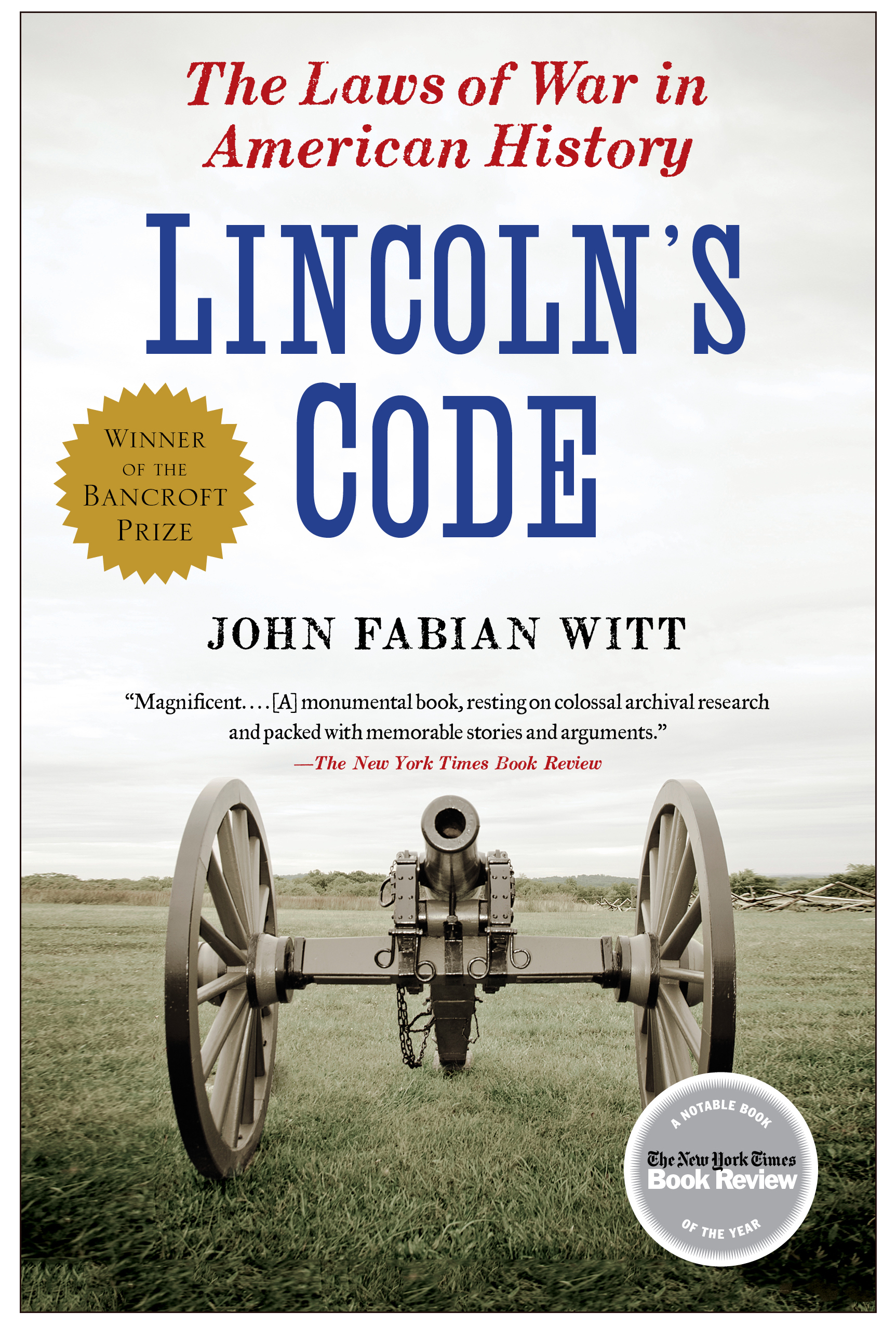
 John Fabian Witt (Yale Law School). Lincoln’s Code: The Laws of War in American History (Free Press, 2012).
“In this pathbreaking and deeply original book, John Fabian Witt tells the hidden story of the laws of war in the first century in the United States –and of the extraordinary code that emerged from it to change the course of world history. Lincoln’s Code is the haunting and inspiring story of an idea in American history: the idea that conduct in war can be regulated by law.”
—Lincoln’s Code Book Jacket