Showing posts with label Jurisprudence. Show all posts

Wednesday, December 23, 2020

Online Courts and the Future of Justice

 Richard Susskind, Online Courts and the Future of Justice (Oxford University Press, 2019). 

Drawing on almost 40 years in the fields of legal technology and jurisprudence, Susskind shows how we can use the remarkable reach of the internet to help people understand and enforce their legal rights. More than half of humanity is now online. More people in the world now have internet access than access to justice. 

-Publisher's Description

Wednesday, June 5, 2019

The Right to Do Wrong: Morality and the Limits of Law

Mark Osiel (University of Iowa College of Law), The Right to Do Wrong: Morality and the Limits of Law (Harvard University Press, 2019).

“Much of what we could do, we shouldn’t—and we don’t. We have a free-speech right to be offensive, but we know we will face outrage in response. We may declare bankruptcy, but not without stigma. Moral norms constantly demand more of us than the law requires, sustaining promises we can legally break and preventing disrespectful behavior the law allows.

Mark Osiel takes up this curious interplay between lenient law and restrictive morality, showing that law permits much wrongdoing because we assume that rights are paired with informal but enforceable duties. . . .For the most part, this system has worked. The Right to Do Wrong collects vivid case studies and social scientific research to explore how resistance to the exercise of rights picks up where law leaves off and shapes the legal system in turn.”

– Publisher’s description

Conformity: The Power of Social Influences

Cass R. Sunstein (Harvard University), Conformity: The Power of Social Influences (New York University Press 2019).

“Bestselling author Cass R. Sunstein reveals the appeal and the danger of conformity. We live in an era of tribalism, polarization, and intense social division — separating people along lines of religion, political conviction, race, ethnicity, and sometimes gender. How did this happen? In Conformity, Cass R. Sunstein argues that the key to making sense of living in this fractured world lies in understanding the idea of conformity — what it is and how it works — as well as the countervailing force of dissent.”

 – Publisher’s description

Guilty Pleasures: Comedy and Law in America

Laura Little (Temple University Law School), Guilty Pleasures: Comedy and Law in America (Oxford University Press 2019).

“Professor Laura Little has written one of the most interesting, original, and entertaining books that I have read in a long time. She examines how humor is treated by the law in a serious and careful manner, but at the same time reveals the humor about the law in cartoons and jokes. I learned a great deal from the book and also no book about law has caused me to laugh so much.”

 – Erwin Chemerinsky, Dean and Jesse H. Choper Distinguished Professor of Law, University of California, Berkeley School of Law

Wednesday, May 4, 2016

These Estimable Courts


Damon M. Cann (Utah State) & Jeff Yates (Binghamton University), These Estimable Courts (Oxford Univ. Press 2016).

"In These Estimable Courts, Damon M. Cann and Jeff Yates explore how citizens feel about the government institutions at the front lines of jurisprudential policy-making in America - our nation's state and local courts. The book's central focus concerns a primary question of governance: why do people support and find legitimate the institutions that govern their lives? Cann and Yates evaluate the factors that drive citizens' support for their state and local courts and that influence peoples' perceptions of the proper role of these courts in our society, as well as how judicial policy-making should be made." 
—Publisher's description

Friday, April 15, 2016

IP and Other Things

Robin Jacob (University College London). IP and Other Things: A Collection of Essays and Speeches (Hart Publishing, 2015).

"The Rt Hon Professor Sir Robin Jacob has been variously a leading member of the Intellectual Property Bar, a High Court judge and, as Lord Justice Jacob, a judge in the Court of Appeal of England and Wales. His primary area of expertise is intellectual property (IP) rights . . . . These essays, selected from his published and unpublished writings and lectures, illustrate the breadth of his learning in IP and other matters. They are written in typically straightforward and entertaining style and, in the case of the older essays, a commentary of what has happened since they were first published."
—Publisher's description 

Tuesday, March 29, 2016

The Future of Law and Economics

Guido Calabresi (Yale), The Future of Law & Economics: Essays in Reform and Recollection (Yale University Press, 2016).

"In a concise, compelling argument, one of the founders and most influential advocates of the law and economics movement divides the subject into two separate areas, which he identifies with Jeremy Bentham and John Stuart Mill. The first, Benthamite, strain, 'economic analysis of law,' examines the legal system in the light of economic theory and shows how economics might render law more effective. The second strain, law and economics, gives equal status to law, and explores how the more realistic, less theoretical discipline of law can lead to improvements in economic theory. It is the latter approach that Judge Calabresi advocates, in a series of eloquent, thoughtful essays that will appeal to students and scholars alike."

—Publisher's description

Wednesday, February 24, 2016

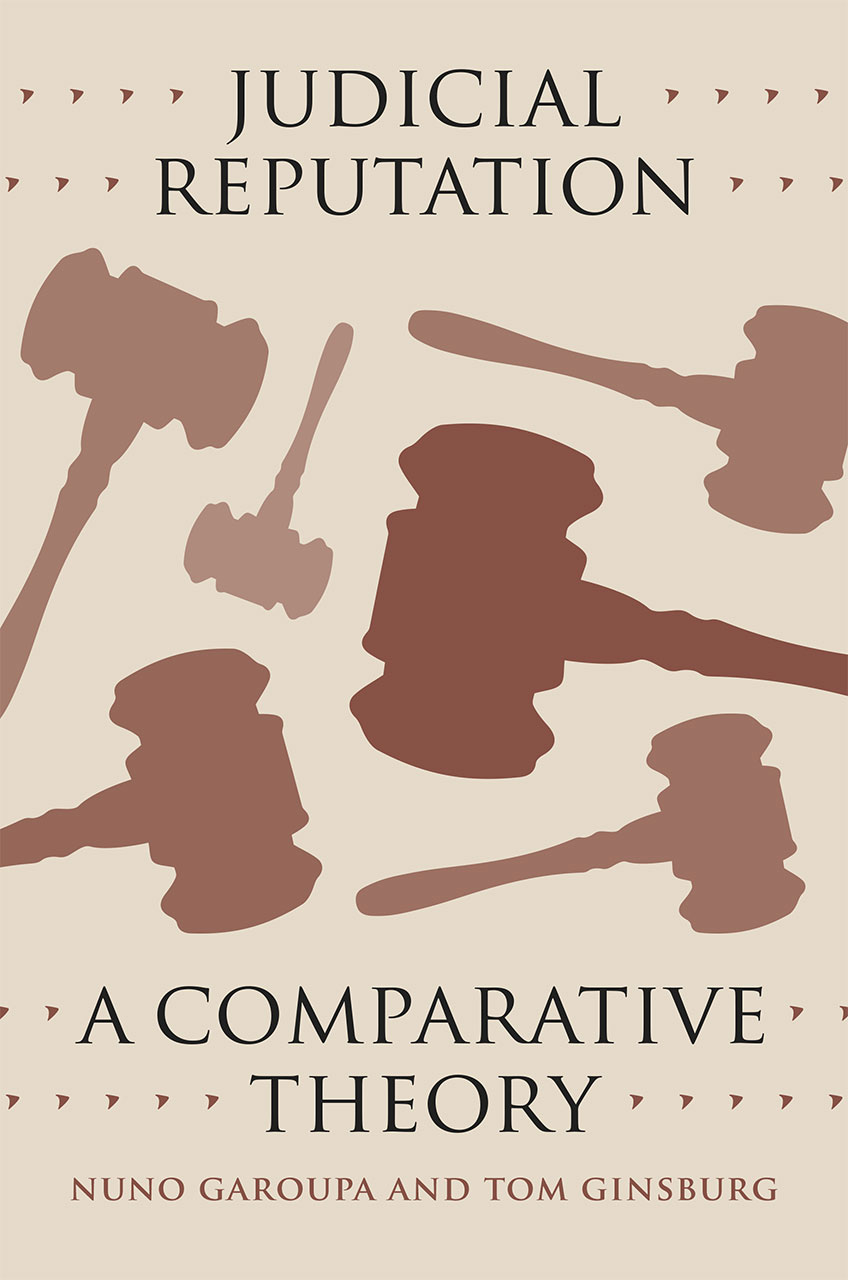
Judicial Reputation: A Comparative Theory

Nuno Garoupa (Texas A&M) & Tom Ginsburg (University of Chicago), Judicial Reputation: A Comparative Theory (University of Chicago Press, 2015).

K2146 .G374 2015 (Treatises)
 
"In Judicial Reputation, Nuno Garoupa and Tom Ginsburg explain how reputation is not only an essential quality of the judiciary as a whole, but also of individual judges. Perceptions of judicial systems around the world range from widespread admiration to utter contempt, and as judges participate within these institutions some earn respect, while others are scorned. Judicial Reputation explores how judges respond to the reputational incentives provided by the different audiences they interact with—lawyers, politicians, the media, and the public itself—and how institutional structures mediate these interactions. The judicial structure is best understood not through the lens of legal culture or tradition, but through the economics of information and reputation."

—Publisher's description

Thursday, January 14, 2016

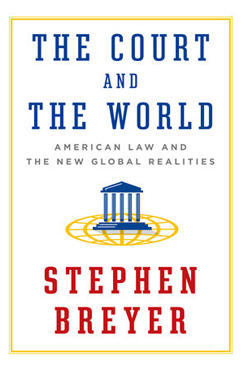
The Court and the World: American Law and the New Global Realities

Stephen Breyer, The Court and the World: American Law and the New Global Realities (Knopf, 2015).


"In his lucid new book, 'The Court and the World,' Breyer contends that events in the world have effectively resolved the foreign law controversy. Playing the judge as enlightened modern technocrat, he offers a reasoned elaboration of the mounting costs that judicial isolationism would entail in our increasingly interconnected world. Globalization, he argues, has made engagement with foreign law and international affairs simply unavoidable." 

—John Fabian Witt, New York Times (Link to Full Review)

Thursday, March 19, 2015

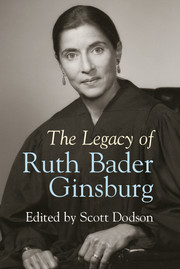
The Legacy of Ruth Bader Ginsburg

Scott Dodson (ed.) (Hastings College of Law). The Legacy of Ruth Bader Ginsburg (Cambridge University Press, 2015).

"Ruth Bader Ginsburg is a legal icon. In more than four decades as a lawyer, professor, appellate judge, and associate justice of the U.S. Supreme Court, Ginsburg has influenced the law and society in real and permanent ways. This book chronicles and evaluates the remarkable achievements Ruth Bader Ginsburg has made over the past half century. Including chapters written by prominent court watchers and leading scholars from law, political science, and history, it offers diverse perspectives on an array of doctrinal areas and on different time periods in Ginsburg's career. Together, these perspectives document the impressive legacy of one of the most important figures in modern law."
—Publisher's website

Monday, July 28, 2014

Scalia: A Court of One

Bruce Allen Murphy (Lafayette College). Scalia: A Court of One (Simon and Schuster, 2014).

"Mr. Murphy’s book does not read, despite its blunt criticisms, like a book-length put-down. It’s a sensitive and scholarly reading of Justice Scalia’s intellectual life. . . . This book is more about the mind than about the man. It’s most impressive for the manner in which the author takes us slowly through case after case and ruling after ruling, sometimes stretching our patience but illuminating every twitch of Justice Scalia’s synapses along the way. This volume, which quotes the justice at length, functions as an M.R.I. scan of one of the most influential conservative thinkers of the 20th century."
―Dwight Garner, New York Times


Tuesday, July 22, 2014

Bentham's Theory of Law and Public Opinion

Xiaobo Zhai & Michael Quinn (eds.). Bentham's Theory of Law and Public Opinion (Cambridge University Press, 2014).  
"This collection represents the latest research from leading scholars whose work has helped to frame our understanding of Bentham since the publication of H. L. A. Hart's Essays on Bentham. The authors explore fundamental areas of Bentham's thought, including the relationship between the rule of law and public opinion; law and popular prejudices or manipulated tastes; Bentham's methodology versus Hart's; sovereignty and codification; and the language of natural rights. Drawing on original manuscripts and volumes in The Collected Works of Jeremy Bentham, the chapters combine philosophical and historical approaches and offer new and more faithful interpretations of Bentham's legal philosophy and its development."
—Publisher's Website

Monday, July 14, 2014

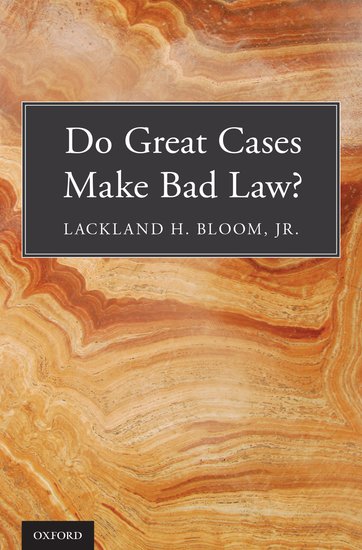
Do Great Cases Make Bad Law?

Lackland H. Bloom, Jr. (Southern Methodist University). Do Great Cases Make Bad Law? (Oxford University Press, 2014).

"In Do Great Cases Make Bad Law?, Lackland H. Bloom, Jr. tests Justice Holmes' dictum by analyzing in detail the history of the Supreme Court's great cases, from Marbury v. Madison in 1803, to National Federation of Independent Business v. Sebelius, the Patient Protection and Affordable Care Act case, in 2012. He treats each case with its own chapter, and explains why the Court found a case compelling, how the background and historical context affected the decision and its place in constitutional law and history, how academic scholarship has treated the case, and how the case integrates with and reflects off of Justice Holmes' famous statement."
—Publisher's website

Monday, April 7, 2014

Understanding Clarence Thomas: The Jurisprudence of Constitutional Restoration

Ralph A. Rossum (Claremont McKenna College). Understanding Clarence Thomas (University Press of Kansas, 2014).

"Rossum's examination of the jurisprudence of Justice Thomas is thorough, well-documented, fair-minded, and admirably clear. Rossum sticks close to Justice Thomas's judicial opinions and lectures, letting them speak largely for themselves. This is not to say that Rossum does not criticize inconsistencies and problems—he does—but his major objective is to explain Thomas's 'Original General Meaning' approach to constitutional interpretation and to show how Thomas applies this approach in many areas of the law. Anyone who wants to understand Justice Thomas's jurisprudence should read this book."
—R. Shep Melnick, Boston College

Saturday, December 28, 2013

Lord Mansfield: Justice in the Age of Reason

Norman S. Poser (Brooklyn Law School).  Lord Mansfield: Justice in the Age of Reason (McGill-Queen's University Press, 2013).

"Mr. Poser offers us a fascinating portrait. Awarded an earldom by George III, Mansfield was a typical 18th-century grandee, ruthlessly ambitious and casually venal. His career made him extremely rich, and his guarded political style often appeared unscrupulously calculated to accelerate his own advancement. But his mind was extraordinary, and he worked with legendary intensity. . . . Mansfield's judgments ingrained themselves into the legal culture of the English-speaking world. Modern rules governing the use of expert testimony, for instance, trace to Mansfield.  The U.S. Supreme Court, Mr. Poser informs us, has cited Mansfield more than 300 times, on issues from defamation to parental rights." 
—Jeffrey Collins

Wednesday, September 25, 2013

The End(s) of Community: History, Sorvereignty, and the Question of Law


Joshua Ben David Nichols (University of Victoria).  The End(s) of Community: History, Sovereignty, and the Question of Law (Wilfrid Laurier University Press, 2013).

"This book stems from an examination of how Western philosophy has accounted for the foundations of law.  In this tradition, the character of the "sovereign" or "lawgiver" has provided the solution to this problem.  But how does the sovereign acquire the right to found law?  As soon as we ask this question we are immediately confronted with a convoluted combination of jurisprudence and theology."
—The End(s) of Community book jacket