Showing posts with label judges. Show all posts

Monday, September 30, 2019

Fidelity & Constraint: How the Supreme Court Has Read the American Constitution

Lawrence Lessig, Fidelity & Constraint: How the Supreme Court Has Read the American Constitution (Oxford University Press, 2019).

In Fidelity & Constraint, Lawrence Lessig explains that one of the most basic approaches to interpreting the constitution is the process of translation. Indeed, some of the most significant shifts in constitutional doctrine are products of the evolution over time of the translation process. In every new era, judges understand their translations as instances of "interpretive fidelity," framed within each new temporal context.

Yet, as Lessig also argues, there is a repeatedly occurring countermove that upends the process of translation. Throughout American history, there has been a second fidelity in addition to interpretive fidelity: what Lessig calls "fidelity to role." In each of the cycles of translation that he describes, the role of the judge -- the ultimate translator -- has evolved too. Old ways of interpreting the text now become illegitimate because they do not match up with the judge's perceived role. And when that conflict occurs, the practice of judges within our tradition has been to follow the guidance of a fidelity to role. Ultimately, Lessig not only shows us how important the concept of translation is to constitutional interpretation, but also exposes the institutional limits on this practice.
-Publisher's Description

Wednesday, February 24, 2016

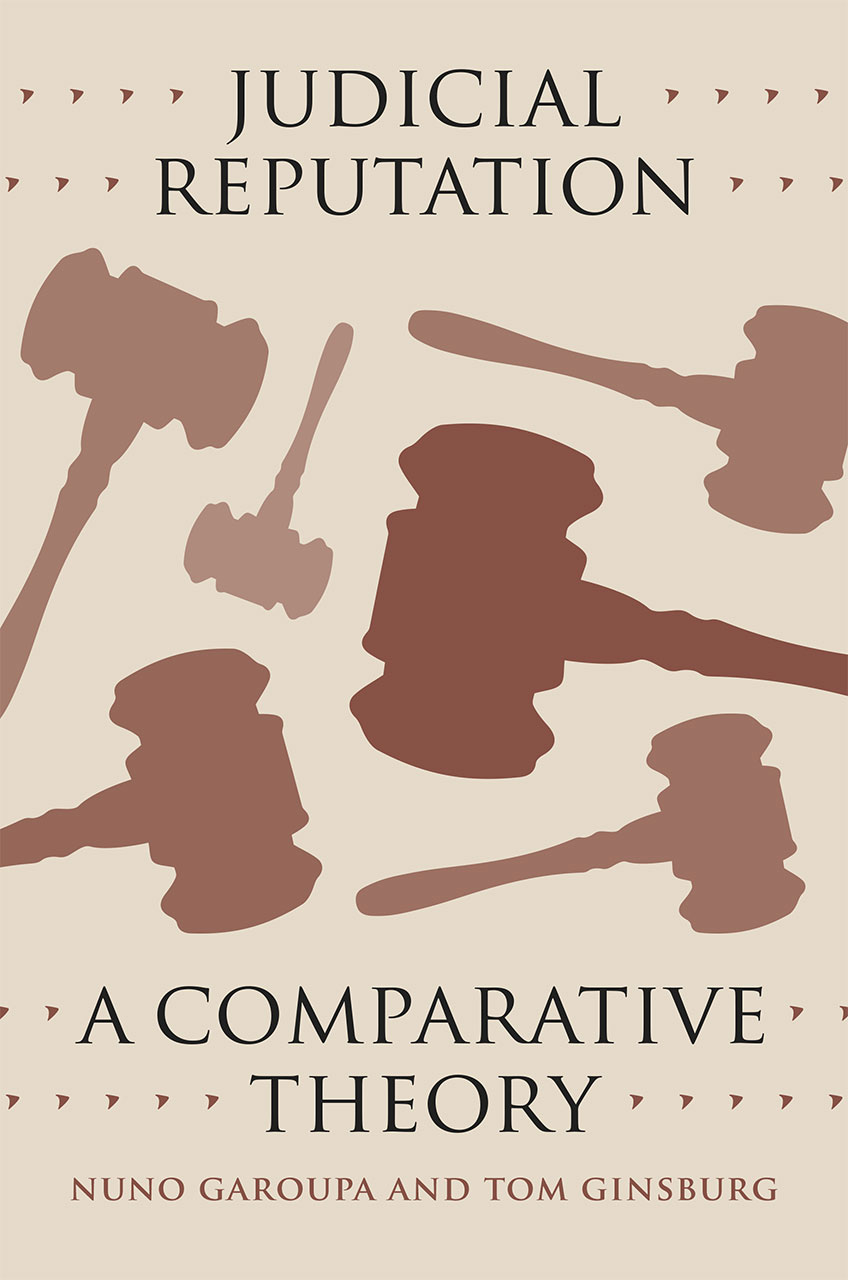
Judicial Reputation: A Comparative Theory

Nuno Garoupa (Texas A&M) & Tom Ginsburg (University of Chicago), Judicial Reputation: A Comparative Theory (University of Chicago Press, 2015).

K2146 .G374 2015 (Treatises)
 
"In Judicial Reputation, Nuno Garoupa and Tom Ginsburg explain how reputation is not only an essential quality of the judiciary as a whole, but also of individual judges. Perceptions of judicial systems around the world range from widespread admiration to utter contempt, and as judges participate within these institutions some earn respect, while others are scorned. Judicial Reputation explores how judges respond to the reputational incentives provided by the different audiences they interact with—lawyers, politicians, the media, and the public itself—and how institutional structures mediate these interactions. The judicial structure is best understood not through the lens of legal culture or tradition, but through the economics of information and reputation."

Publisher's description