Wednesday, March 5, 2014

Act of Congress: How America's Essential Institution Works, and How it Doesn't

Robert G. Kaiser.  Act of Congress (Alfred A. Knopf, 2013).

"Mr. Kaiser, a 50-year veteran of the Washington Post, secured the cooperation of the bill's namesakes, former Connecticut Sen. Chris Dodd and former Massachusetts Rep. Barney Frank, as well as that of their closest aides. (Mr. Dodd chaired the Senate Banking Committee, Mr. Frank the House Financial Services Committee.) Act of Congress thus offers a detailed 'tick-tock,' taking the reader through the bill's origins and drafting as well as the unsightly process by which it became law. . . . What makes Act of Congress a somewhat surprising addition to the Broken Congress genre is that Dodd-Frank would seem to be an example of the system working: Politicians responded to the perceived needs of their constituents, and a bill was passed. Yet, Mr. Kaiser argues, the process itself illustrated what's wrong with Washington, and the legislation ultimately passed more because of luck and circumstance than the wisdom of judicious lawmakers."
Jonathan Martin, Wall Street Journal

Thursday, February 27, 2014

Originalism and the Good Constitution

John O. McGinnis & Michael B. Rappaport (Northwestern University, University of San Diego). Originalism and the Good Constitution (Harvard University Press, 2013).

"In their innovative defense of originalism, John McGinnis and Michael Rappaport maintain that the text of the Constitution should be adhered to by the Supreme Court because it was enacted by supermajorities—both its original enactment under Article VII and subsequent Amendments under Article V. A text approved by supermajorities has special value in a democracy because it has unusually wide support and thus tends to maximize the welfare of the greatest number. . . . A fascinating counterfactual they pose is this: had the Supreme Court not interpreted the Constitution so freely, perhaps the nation would have resorted to the Article V amendment process more often and with greater effect."
Originalism and the Good Constitution book jacket.


Tuesday, February 25, 2014

The Burglary

Betty Medsger (San Francisco State University). The Burglary (Alfred A Knopf, 2014).

"Calling themselves the Citizens’ Commission to Investigate the F.B.I., the burglars not only stole every file in the office, they also circulated the worst of them to journalists across the country. The reporter Betty Medsger received a batch in her mailbox at The Washington Post. Though nothing she read even remotely compromised national security, there was plenty of material guaranteed to embarrass the F.B.I. . . . The stolen material included the secret case histories of thousands of Americans. Much of it was malicious gossip about things like sexual deviance and race-­mixing, two of Hoover’s favorite subjects."
—David Oshinsky, New York Times

Thursday, February 20, 2014

The Geography of Love: Same-sex Marriage & Relationship Recognition in America (The Story in Maps)

Peter Nicolas & Mark Strong (University of Washington).  The Geography of Love, Third Edition (2013).

"With 15 years' experience as a geographic-information systems or mapping specialist, Strong scoured census records and maps for information that brought election results and gay rights together.  Nicolas, meanwhile, brought his legal mind to what was an exhaustive research effort, as well as a bit of insider knowledge. In 1992, as a 21-year-old graduate student at the University of Michigan, he was elected to the Ann Arbor City Council and voted on an ordinance extending domestic-partner benefits to city employees. As a law professor who teaches a class each year on GLBT rights and the constitution, Nicolas said he found domestic partnership registries in places 'where you didn't think they existed.'"
 —Lornet Turnbull, Seattle Times

Tuesday, February 18, 2014

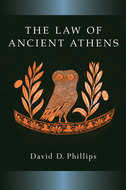
The Law of Ancient Athens

David D. Philips (UCLA).  The Law of Ancient Athens (University of Michigan Press, 2013).

"Offering a comprehensive treatment of Athenian law, it assumes no prior knowledge of the subject and is organized in user-friendly fashion, progressing from the person to the family to property and obligations to the gods and to the state. . . . Topics covered in the book include homicide and wounding; theft; marriage, children, and inheritance; citizenship; contracts and commerce; impiety; treason and other offenses against the state; and sexual offenses including rape and prostitution.  The volume's unique feature is its presentation of the actual primary sources for Athenian laws. . . . The translated sources, together with topical introductions, notes, and references, will facilitate both research in the field and the teaching of increasingly popular courses on Athenian law and law in the ancient world."  
The Law of Ancient Athens book jacket

Call number: KL 4115 .A75 P45 2013