Showing posts with label Criminal law. Show all posts

Friday, May 31, 2019

The Politicization of Safety: Critical Perspectives on Domestic Violence Responses

The Politicization of Safety: Critical Perspectives on Domestic Violence Responses (Jane K. Stoever ed., New York University Press 2019).


Domestic violence is commonly assumed to be a bipartisan, nonpolitical issue, with politicians of all stripes claiming to work to end family violence. Nevertheless, the Violence Against Women Act expired for over 500 days between 2012 and 2013 due to differences between the U.S. Senate and House, demonstrating that legal protections for domestic abuse survivors are both highly political and highly vulnerable. Racial and gender politics, the move toward criminalization, reproductive justice concerns, gun control debates, and political interests are increasingly shaping responses to domestic violence, demonstrating the need for greater consideration of the interplay of politics, domestic violence, and how the law works in people’s lives. 

The Politicization of Safety provides a critical historical perspective on domestic violence responses in the United States. It grapples with the ways in which child welfare systems and civil and criminal justice responses intersect, and considers the different, overlapping ways in which survivors of domestic abuse are forced to cope with institutionalized discrimination based on race, gender, sexual orientation, and immigration status. The book also examines movement politics and the feminist movement with respect to domestic violence policies. The tensions discussed in this book, similar to those involved in the #metoo movement, include questions of accountability, reckoning, redemption, healing, and forgiveness. 

What is the future of feminism and the movements against gender-based violence and domestic violence? Readers are invited to question assumptions about how society and the legal system respond to intimate partner violence and to challenge the domestic violence field to move beyond old paradigms and contend with larger justice issues.
- Publisher's description                      

Friday, April 26, 2019

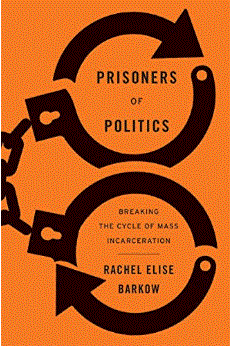
Prisoners of Politics: Breaking the Cycle of Mass Incarceration

Rachel Elise Barkow (New York University), Prisoners of Politics: Breaking the Cycle of Mass Incarceration (Harvard University Press 2019).


America’s criminal justice system reflects irrational fears stoked by politicians seeking to win election. Pointing to specific policies that are morally problematic and have failed to end the cycle of recidivism, Rachel Barkow argues that reform guided by evidence, not politics and emotions, will reduce crime and reverse mass incarceration.
- Publisher's description         

Monday, February 13, 2017

Ignorance of Law: A Philosophical Inquiry

Douglas Husak (Rutgers University), Ignorance of Law: A Philosophical Inquiry, (Oxford Univ. Press 2016).

" . . . Since persons cannot be faulted for failing to respond to reasons for criminal liability they do not believe they have, then ignorance should almost always excuse. But persons are somewhat responsible for their wrongs when their mistakes of law are reckless, that is, when they consciously disregard a substantial and unjustifiable risk that their conduct might be wrong. This book illustrates this with examples and critiques the arguments to the contrary offered by criminal theorists and moral philosophers. It assesses the real-world implications for the U.S. system of criminal justice. The author describes connections between the problem of ignorance of law and other topics in moral and legal theory."

—From  Publisher's description


Thursday, January 19, 2017

Copyright Beyond Law

Marta Iljadica (University of Southampton), Copyright Beyond Law: Regulating Creativity in the Graffiti Subculture (Hart 2016).

"The form of graffiti writing on trains and walls is not accidental. Nor is its absence on cars and houses. Employing a particular style of letters, choosing which walls and trains to write on, copying another writer, altering or destroying another writer's work: these acts are regulated within the graffiti subculture. Copyright Beyond Law presents findings from empirical research undertaken into the graffiti subculture to show that graffiti writers informally regulate their creativity through a system of norms that are remarkably similar to copyright."


—Publisher's description

Tuesday, December 27, 2016

Infocrime: Protecting Information through Criminal Law

Eli Lederman, Infocrime: Protecting Information through Criminal Law (Edward Elgar 2016).

"It has often been said that information is power. This is more true in the information age than ever. The book profiles the tools used by criminal law to protect confidential information. It deals with the essence of information, the varieties of confidential information, and the basic models for its protection within the context of the Internet and social networks.

Eli Lederman examines the key prohibitions against collecting protected information, and against using, disclosing, and disseminating it without authorization. The investigation cuts across a broad subject matter to discuss and analyze key topics such as trespassing and peeping, the human body as a source of information, computer trespassing, tracking and collecting personal information in the public space, surveillance, privileged communications, espionage and state secrets, trade secrets, personal information held by others, and profiling and sexting."
 
—Publisher's description

Wednesday, February 10, 2016

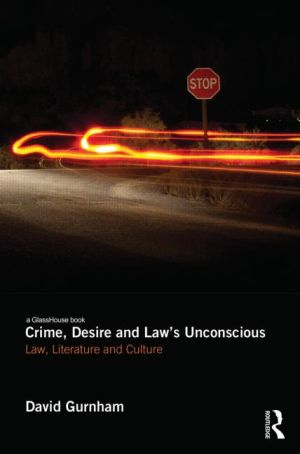
Crime, Desire, and Law's Unconciousness

David Gurnham (Southampton Law School), Crime, Desire and Law's Unconscious: Law, Literature and Culture (Wildy & Sons

"By way of a novel application of theory that draws from psychoanalysis, post-colonialism and feminism, the book examines ways in which the creation of danger and the infliction of harm through sexual behavior are responded to in the criminal courts, in literature and in the wider culture. Presenting analysis of legal judgments in England, Australia, Canada and the United States, and literary texts by Shakespeare, the Marquis de Sade, J.G. Ballard and Susanna Moore, the book argues that punitive and condemnatory reactions to illegal and dangerous sexual practices repress conflicting and troubling unconscious desires."
—Publisher's description


Friday, December 11, 2015

Operation Greylord: The True Story of an Untrained Undercover Agent and America's Biggest Corruption Bust

Terrance Hake & Wayne Klatt.  Operation Greylord (Ankerwycke, 2015).

"Operation Greylord was the longest and most successful undercover investigation in FBI history, and the largest corruption bust ever in the U.S. It resulted in bribery and tax charges against 103 judges, lawyers, and other court personnel, and, eventually, more than seventy indictments. And it was led by Terrence Hake, a young assistant prosecutor in the Cook County State’s Attorney’s Office in Chicago, who worked undercover for nearly four years, accepting bribes, making payoffs, wearing a wire in bars and to racetracks, bugging a judge’s chambers, and befriending people he knew he would betray. Operation Greylord has never before been detailed by an insider in the investigation." 
—Publisher's description

Tuesday, May 26, 2015

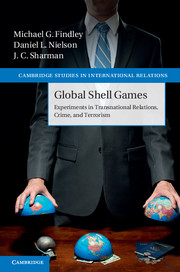
Global Shell Games: Experiments in Transnational Relations, Crime, and Terrorism

Michael G. Findley (University of Texas), Daniel L. Nielson (Brigham Young University) & J.C. Sherman (Griffith University). Global Shell Games (University of Cambridge Press, 2014).

"Every year a staggering number of unidentified shell corporations succeed in hiding perpetrators of terrorist financing, corruption and illegal arms trades, but the degree to which firms flout global identification standards remains unknown. Adopting a unique, experimental methodology, Global Shell Games attempts to unveil the sordid world of anonymous shell corporations. Posing as twenty-one different international consultants, the authors approached nearly 4,000 services in over 180 countries to discover just how easy it is to form an untraceable company. Combining rigorous quantitative analysis, qualitative investigation of responses and lurid news reports, this book makes a significant research contribution to compliance with international law and international crime and terrorism whilst offering a novel, new approach to the field of political science research." 
—From publisher's website

Wednesday, April 15, 2015

The Eternal Criminal Record

James B. Jacobs (New York University). The Eternal Criminal Record (Harvard University Press, 2015).


"The United States is unique in making criminal information easy to obtain by employers, landlords, neighbors, even cyberstalkers. Its nationally integrated rap-sheet system is second to none as an effective law enforcement tool, but it has also facilitated the transfer of ever more sensitive information into the public domain. While there are good reasons for a person’s criminal past to be public knowledge, records of arrests that fail to result in convictions are of questionable benefit. Simply by placing someone under arrest, a police officer has the power to tag a person with a legal history that effectively incriminates him or her for life."
—From publisher's website

Thursday, March 12, 2015

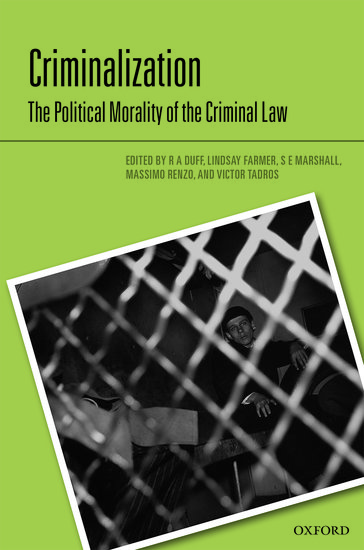
Criminalization: The Political Morality of the Criminal Law

R.A. Duff, Lindsay Farmer, S.E. Marshall, Massimo Renzo, and Victor Tadros (eds.). Criminalization: The Political Morality of the Criminal Law (Oxford University Press, 2014).

"The fourth book in the [Criminalization] series examines the political morality of the criminal law, exploring general principles and theories of criminalization. Chapters provide accounts of the criminal law in the light of ambitious theories about moral and political philosophy - republicanism and contractarianism, or reflect upon on the success of important theories of criminalization by viewing them in a novel light. Ideas that are fundamental to any complete theory of the criminal law - liberty, harm, and the effect on victims - are investigated in depth. Sociological investigation of the criminal law grounds a critical investigation into the principles of criminalization, both as a legislative matter, and with respect to criminalization practices, in contemporary and historical contexts."
—Publisher's website