Showing posts with label Mass incarceration. Show all posts

Tuesday, June 15, 2021

Chokehold

 Paul Butler, Chokehold: Policing Black Men (New Press, 2017).

In his no-holds-barred style, Butler, whose scholarship has been featured on 60 Minutes and published widely, uses new data to demonstrate that white men commit the majority of violent crimes in the United States. For example, a white woman is ten times more likely to be raped by a white male acquaintance than to be the victim of a violent crime perpetrated by a black man. Butler also frankly discusses the problem of black male violence and how to keep communities safer -- without relying as much on police. 

-Publisher's Description

Friday, April 26, 2019

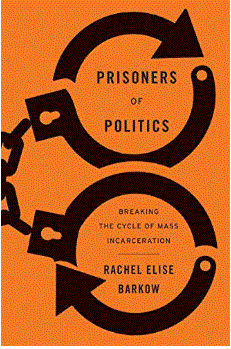
Prisoners of Politics: Breaking the Cycle of Mass Incarceration

Rachel Elise Barkow (New York University), Prisoners of Politics: Breaking the Cycle of Mass Incarceration (Harvard University Press 2019).


America’s criminal justice system reflects irrational fears stoked by politicians seeking to win election. Pointing to specific policies that are morally problematic and have failed to end the cycle of recidivism, Rachel Barkow argues that reform guided by evidence, not politics and emotions, will reduce crime and reverse mass incarceration.
- Publisher's description         

Tuesday, May 17, 2016

A Country Called Prison: Mass Incarceration and the Making of a New Nation

Mary D. Looman  & John D. Carl (University of Oklahoma), A Country Called Prison: Mass Incarceration and the Making of a New Nation (Oxford Univ. Press 2015).

"In A Country Called Prison, Mary Looman and John Carl propose a paradigm shift in the way that American society views mass incarceration. Weaving together sociological and psychological principles, theories of political reform, and real-life stories from experiences working in prison and with at-risk families, Looman and Carl form a foundation of understanding to demonstrate that prison is more than an institution built of fences and policies - it is a culture. Prison continues well after incarceration, as ex-felons leave correctional facilities (and often return to impoverished neighborhoods) without money or legal identification of American citizenship. Trapped in the isolation of poverty, these legal aliens turn to illegal ways of providing for themselves and are often reimprisoned."
Publisher's description

Wednesday, March 9, 2016

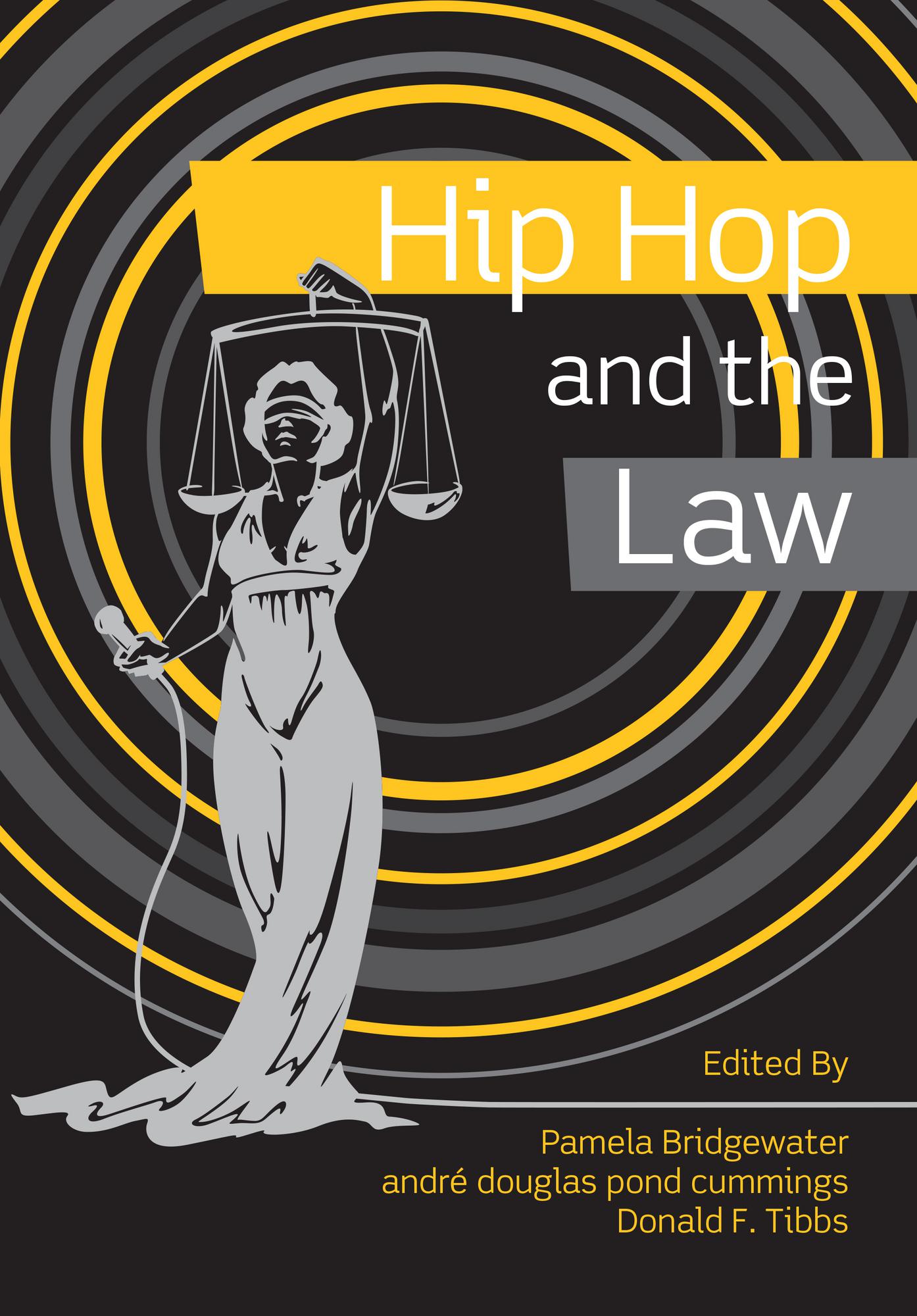
Hip Hop and the Law

Pamela Bridgewater, andrĂ© douglas pond cummings & Donald F. Tibbs (eds.), Hip Hop and the Law (Carolina Academic Press, 2015). 

KF389 .H57 2015 (Treatises)

"What is important to understanding American law? What is important to understanding hip hop? Wide swaths of renowned academics, practitioners, commentators, and performance artists have answered these two questions independently. And although understanding both depends upon the same intellectual enterprise, textual analysis of narrative storytelling, somehow their intersection has escaped critical reflection. Hip Hop and the Law merges the two cultural giants of law and rap music and demonstrates their relationship at the convergence of Legal Consciousness, Politics, Hip Hop Studies, and American Law. No matter what your role or level of experience with law or hip hop, this book is a sound resource for learning, discussing, and teaching the nuances of their relationship. Topics include Critical Race Theory, Crime and Justice, Mass Incarceration, Gender, and American Law: including Corporate Law, Intellectual Property, Constitutional Law, and Real Property Law."
—Publisher's description

Thursday, December 4, 2014

Justice through Apologies: Remorse, Reform, and Punishment

Nick Smith (University of New Hampshire). Justice through Apologies (Cambridge University Press, 2014).

"After rejecting court-ordered apologies as unjustifiable humiliation, this book explains that penitentiaries were originally designed to bring about penance – something like apology – and that this tradition has been lost in the assembly line of mass incarceration. Smith argues that the state should modernize these principles and techniques to reduce punishments for offenders who demonstrate moral transformation through apologizing. Smith also explains the counterintuitive situation whereby apologies come to have considerable financial worth in civil cases because victims associate them with priceless matters of the soul. Such confusions allow powerful wrongdoers to manipulate perceptions to disastrous effect, such as when corporations or governments assert that apologies do not equate to accepting blame or require reform or redress."
Publisher's website


Wednesday, June 25, 2014

Inferno: An Anatomy of American Punishment

Robert A. Ferguson (Columbia University). Inferno (Harvard University Press, 2014).

"The book is potentially transformative not just because it offers policy makers some solutions to the litany of problems they face as they seek ways to reform our broken penal systems. It is transcendent because it posits that America needs a fundamentally revised understanding of the concept of punishment itself if it is to save its soul in these prisons . . . . This book forces prison officials and lawmakers to look inward and see within themselves the dark, unremitting reasons why things have gotten as bad as they have inside our prisons and jails. It says squarely to these political and legal and community leaders (and by extension to their constituents): in seeking to bring retributive justice to bear, in seeking to diminish the prisoner, you have also diminished yourself in ways you are unable or unwilling to admit . . . ."

—Andrew Cohen, The Atlantic