Katherine Franke (Columbia University), Wedlocked: The Perils of Marriage Equality (NYU Press, 2015).
 "Wedlocked turns to history to compare today’s same-sex marriage movement to the experiences of newly emancipated black people in the mid-nineteenth century, when they were able to legally marry for the first time. Like same-sex couples today, freed African-American men and women experienced a shift in status from outlaws to in-laws, from living outside the law to finding their private lives organized by law and state licensure. Their experiences teach us the potential and the perils of being subject to legal regulation: rights—and specifically the right to marriage—can both burden and set you free."
—Publisher's description
"Wedlocked turns to history to compare today’s same-sex marriage movement to the experiences of newly emancipated black people in the mid-nineteenth century, when they were able to legally marry for the first time. Like same-sex couples today, freed African-American men and women experienced a shift in status from outlaws to in-laws, from living outside the law to finding their private lives organized by law and state licensure. Their experiences teach us the potential and the perils of being subject to legal regulation: rights—and specifically the right to marriage—can both burden and set you free."
—Publisher's description
Robert Spitzer (SUNY Cortland), Guns Across America (Oxford University Press, 2015).
"As Robert J. Spitzer demonstrates in Guns across America, gun ownership is as old as the nation, but so is gun regulation. Drawing on a vast new dataset of early gun laws reflecting every imaginable type of regulation, Spitzer reveals that firearms were actually more strictly regulated in the country's first three centuries than in recent years. The first 'gun grabbers' were not 1960's Chablis-drinking liberals, but seventeenth century rum-guzzling pioneers, and their legacy continued through strict gun regulations in the 1920s and beyond. Spitzer examines interpretations of the Second Amendment, the assault weapons controversy, modern 'stand your ground' laws, and the so-called 'right of rebellion' to show that they play out in America's contemporary political landscape in ways that bear little resemblance to our imagined past."
—Publisher’s
description
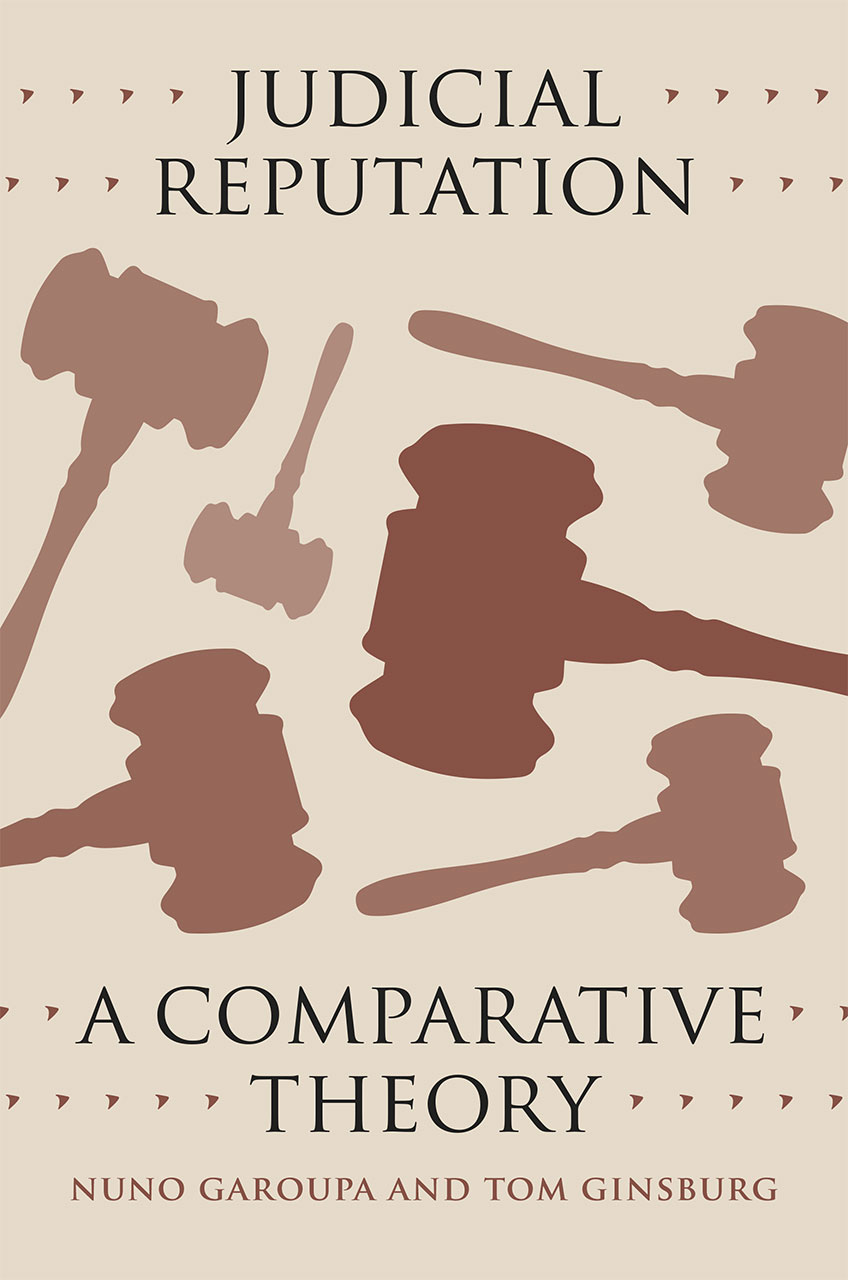
Nuno Garoupa (Texas A&M) & Tom Ginsburg (University of Chicago), Judicial Reputation: A Comparative Theory (University of Chicago Press, 2015).
K2146 .G374 2015 (Treatises)
"In Judicial Reputation, Nuno Garoupa and Tom Ginsburg explain how reputation is not only an essential quality of the judiciary as a whole, but also of individual judges. Perceptions of judicial systems around the world range from widespread admiration to utter contempt, and as judges participate within these institutions some earn respect, while others are scorned. Judicial Reputation explores how judges respond to the reputational incentives provided by the different audiences they interact with—lawyers, politicians, the media, and the public itself—and how institutional structures mediate these interactions. The judicial structure is best understood not through the lens of legal culture or tradition, but through the economics of information and reputation."
—Publisher's description
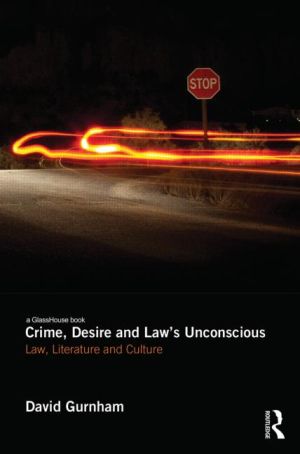
David Gurnham (Southampton Law School), Crime, Desire and Law's Unconscious: Law, Literature and Culture (Wildy & Sons
"By way of a novel application of theory that draws from psychoanalysis, post-colonialism and feminism, the book examines ways in which the creation of danger and the infliction of harm through sexual behavior are responded to in the criminal courts, in literature and in the wider culture. Presenting analysis of legal judgments in England, Australia, Canada and the United States, and literary texts by Shakespeare, the Marquis de Sade, J.G. Ballard and Susanna Moore, the book argues that punitive and condemnatory reactions to illegal and dangerous sexual practices repress conflicting and troubling unconscious desires."
—Publisher's description
Alessandro Chechi (University of Geneva). The Settlement of International Cultural Heritage Disputes (Oxford University Press, 2014).
"This book offers a comprehensive and innovative analysis of the settlement of cultural heritage disputes. This examination is two-fold. First, it assesses the existing legal framework and the available dispute settlement means. Second, it explores the feasibility of two solutions for overcoming the lack of a specialized forum. The first is the establishment of a new international court. The second concerns existing judicial and extra-judicial fora and their interaction through the practice of 'cross-fertilization'. The book focuses on the substance of such interaction, and identifies a number of culturally-sensitive parameters (the 'common rules of adjudication'). It argues that existing judicial and non-judicial fora should adopt a cross-fertilizing perspective to use and disseminate jurisprudence containing these common rules of adjudication."
—Publisher's description
 "Wedlocked turns to history to compare today’s same-sex marriage movement to the experiences of newly emancipated black people in the mid-nineteenth century, when they were able to legally marry for the first time. Like same-sex couples today, freed African-American men and women experienced a shift in status from outlaws to in-laws, from living outside the law to finding their private lives organized by law and state licensure. Their experiences teach us the potential and the perils of being subject to legal regulation: rights—and specifically the right to marriage—can both burden and set you free."